
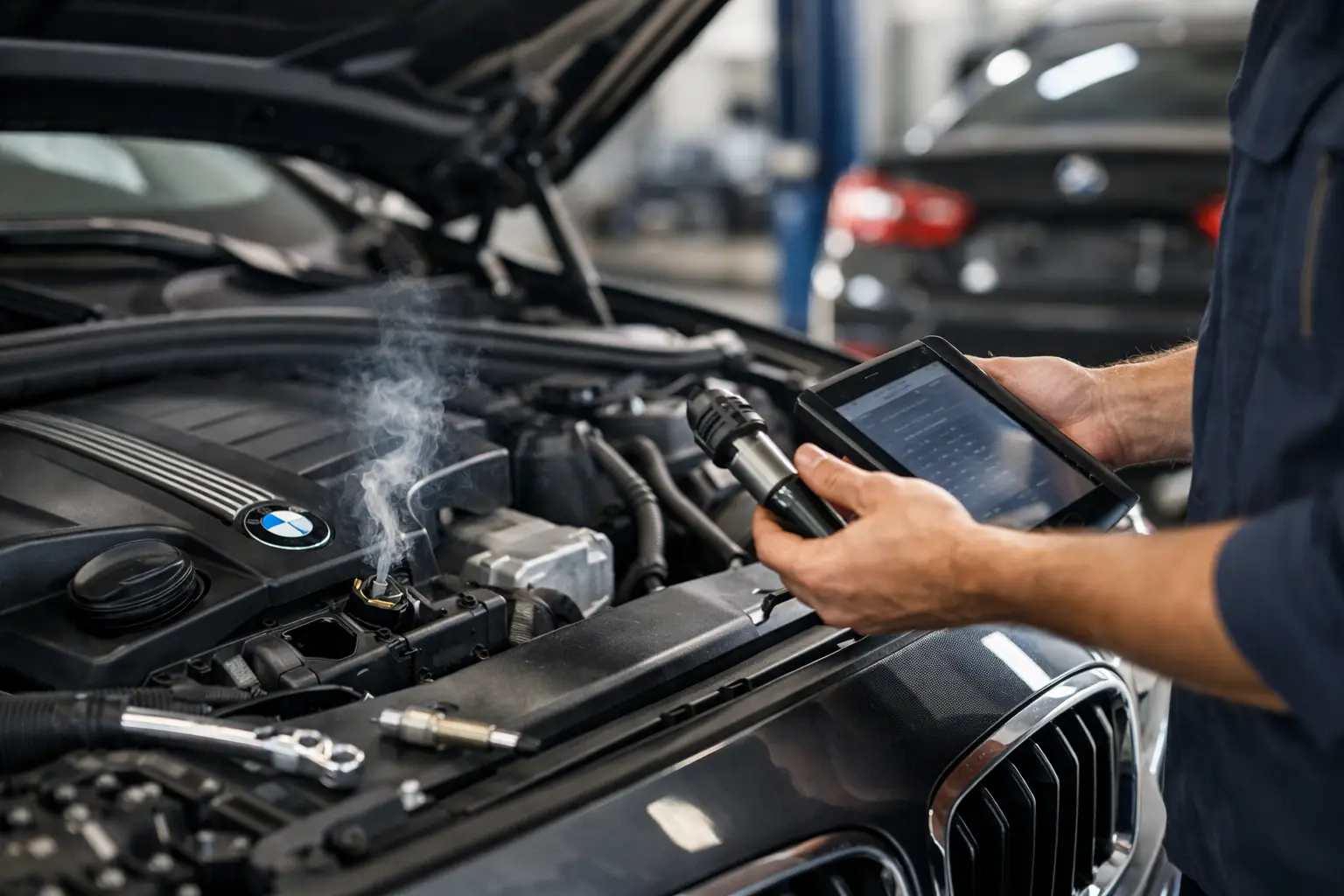
That rough idle at a stoplight, the sudden loss of power when you accelerate, or the flashing check engine light on your dash usually points to one thing – a misfire that needs attention now, not next week. BMW engine misfire repair is rarely a one-size-fits-all job, because the symptom is simple but the cause can vary from a worn spark plug to a fuel delivery issue, a failing ignition coil, or a deeper air-fuel imbalance.
On a BMW, the difference matters. These engines are engineered for precise timing, fuel metering, and ignition performance, so even a small fault can affect drivability fast. What starts as a slight hesitation can turn into poor fuel economy, catalytic converter damage, and a vehicle that no longer feels like a BMW should.
Why BMW engine misfire repair needs proper diagnostics
A misfire means one or more cylinders are not burning the air-fuel mixture correctly. That sounds straightforward, but the reason behind it is not always obvious from the driver’s seat. Two vehicles can show the same warning light and run poorly for completely different reasons.
This is where BMW-specific diagnostics matter. Generic code readers may point to a cylinder number, but they often do not tell the full story. If cylinder three is misfiring, the failed part might be the spark plug in that cylinder. It might also be the coil, an injector problem, a vacuum leak affecting that bank, carbon buildup, or a sensor issue changing fuel trim values. Replacing parts based on a guess can get expensive quickly.
An experienced European repair shop will usually verify the fault, review fault memory, look at live data, and test related systems before recommending repairs. That approach takes a little more time up front, but it usually saves money and frustration compared with chasing the problem one part at a time.
Common causes of BMW engine misfire repair
Ignition faults are among the most common reasons a BMW develops a misfire. Spark plugs wear gradually, and ignition coils can weaken or fail, especially as mileage climbs. In many cases, the engine may start with a slight stumble under load before the fault becomes severe enough to trigger a warning light.
Fuel delivery problems are another possibility. A clogged or failing fuel injector can leave a cylinder running lean, while low fuel pressure can affect multiple cylinders at once. If the misfire shows up more during acceleration or cold starts, fuel system testing becomes especially important.
Air leaks can also create misfire conditions. BMW engines depend on accurate airflow measurement, so cracked hoses, failed intake components, or vacuum leaks can upset the air-fuel ratio and cause rough running. Depending on the engine family, these leaks may be obvious or buried enough that they require smoke testing and careful inspection.
Carbon buildup is another factor, especially on direct-injection engines. Over time, intake valve deposits can disrupt airflow and combustion quality. Not every misfire is caused by carbon, but on certain BMW models it is a realistic part of the diagnosis.
There are also cases where a misfire is tied to sensor input or mechanical wear. That does not mean the worst every time. It does mean the repair path should be based on testing, not assumptions.
Signs the misfire is getting worse
Some misfires start subtly. The engine may feel a little shaky at idle, or you may notice reduced throttle response pulling away from a stop. As the condition progresses, the vehicle can hesitate under load, shake more noticeably, and illuminate the check engine light.
A flashing check engine light is more urgent than a steady one. That typically means the misfire is active enough to risk damage to the catalytic converter. Continuing to drive for long in that condition can turn a manageable repair into a much more expensive visit.
A fuel smell, unusually rough cold starts, or a sudden drop in fuel economy are also warning signs worth taking seriously. BMWs are good at masking minor issues early, which is why many drivers put off service longer than they should. By the time the vehicle feels clearly wrong, the fault has often been present for a while.
What a BMW engine misfire repair visit should look like
A good repair process begins with listening. The technician should want to know when the issue happens, whether it occurs only during cold starts, under acceleration, at idle, or all the time. Those details often narrow the diagnosis faster than fault codes alone.
From there, the vehicle should be scanned with proper diagnostic equipment, and the findings should be confirmed with testing. If a coil is suspected, it may be swapped to another cylinder to verify whether the misfire follows. If a fuel issue is suspected, injector behavior and fuel delivery should be checked. If air leaks are possible, smoke testing or intake inspection may be needed.
The most honest repair shops do not jump straight to the longest estimate. They identify the most likely cause, explain the evidence, and let you know if there are related items worth addressing at the same time. For example, if one ignition coil has failed on a higher-mileage BMW, it may be reasonable to discuss the condition of the remaining coils and spark plugs. That is not upselling when it is explained clearly. It is helping you avoid another breakdown two weeks later.
When simple repairs are enough – and when they are not
Sometimes BMW engine misfire repair is straightforward. A fresh set of spark plugs and a failed coil replacement can restore smooth performance quickly. If the issue is caught early, that may be all the vehicle needs.
Other times, the answer is more layered. A recurring misfire after basic ignition parts are replaced usually means the original symptom had another root cause. This is where quality diagnostics pay off. An injector issue, intake leak, software-related fault, or carbon buildup can mimic a simple ignition problem. Installing more parts without confirming the cause usually wastes time and money.
There is also a mileage and maintenance history factor. A newer BMW with a recent tune-up history may point technicians in one direction. An older vehicle with unknown service intervals and multiple pending codes may require a broader inspection. The right repair depends on the full picture.
Why delaying misfire service costs more
Misfires do not usually fix themselves. Even if the problem seems to come and go, the underlying fault is still there. Delaying service often leads to additional wear on ignition components, poor fuel economy, and extra strain on emissions components.
The biggest cost risk is catalytic converter damage. When a cylinder misfires, unburned fuel can enter the exhaust system and overheat the converter. Replacing the original cause early is almost always less expensive than ignoring it until exhaust components are affected.
There is also the drivability side of ownership. BMW owners expect responsive acceleration, smooth idle quality, and refined power delivery. A misfire takes away all three. If your vehicle no longer feels right, that is reason enough to have it checked.
Choosing the right shop for BMW engine misfire repair
Not every shop approaches European diagnostics the same way. For BMW engine misfire repair, you want a team that understands brand-specific systems, uses manufacturer-grade equipment, and explains the repair in plain language. Clear communication matters just as much as technical ability.
You should expect transparency about what was found, what was tested, and why a repair is being recommended. You should also expect realistic guidance about whether the fix is isolated or whether related maintenance should be considered at the same time. That balance of expertise and honesty is what separates a true dealer alternative from a shop that simply reads codes and replaces parts.
For BMW owners in Palatine and the northwest suburbs, that level of service is exactly what shops like Wizard Werks are built to provide – specialized care, personal attention, and repairs done correctly without the dealership experience.
If your BMW is idling rough, hesitating, or flashing a check engine light, the smartest move is to address it while the problem is still contained. A well-diagnosed misfire repair restores more than engine performance – it restores confidence every time you turn the key.