
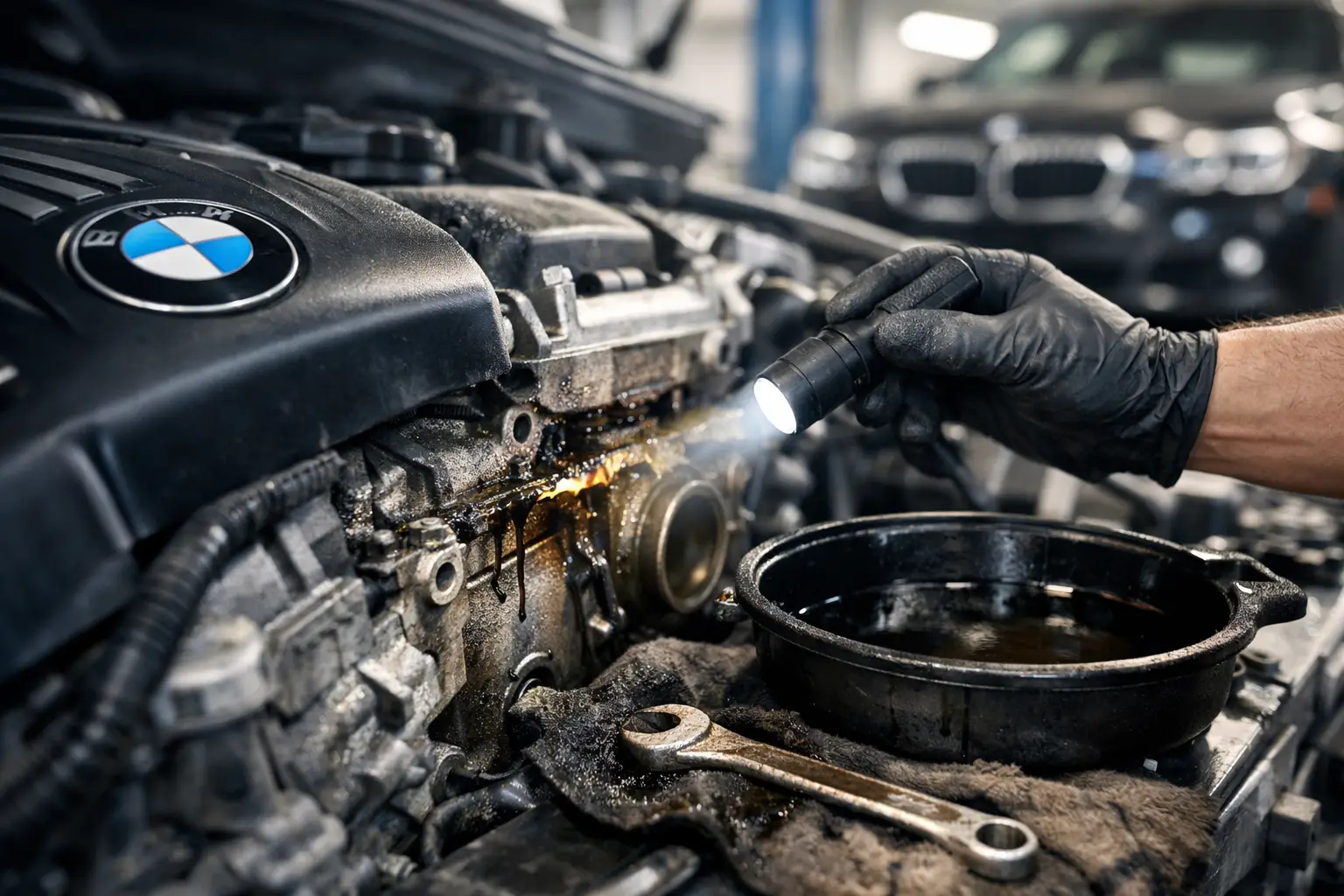
That burnt-oil smell after a drive, a few drops on the garage floor, or smoke rising lightly from the engine bay at a stoplight – those are usually the first signs that BMW oil leak repair should move from the back burner to the top of your to-do list. On a BMW, small leaks rarely stay small for long. Heat, pressure, aging seals, and tight engine packaging can turn a manageable repair into a bigger and more expensive one if it is ignored.
BMW owners often ask the same question: is this a nuisance, or is it serious? The honest answer is that it depends on where the leak is coming from, how much oil is escaping, and whether other components are being affected. Some leaks begin with a simple gasket failure. Others point to issues involving crankcase pressure, brittle plastic housings, or seals that have hardened over time. The key is proper diagnosis before any parts are replaced.
Why BMW oil leak repair needs brand-specific diagnosis
BMW engines are engineered tightly, and that makes leak diagnosis more involved than many drivers expect. Oil can travel along covers, cooling hoses, brackets, and undertrays before it finally drips to the ground. What looks like an oil pan leak may actually be coming from much higher up on the engine.
This is one reason general repair guesswork gets expensive. Replacing the wrong gasket does not fix the source, and now the vehicle owner has paid for labor twice. A specialist approach starts by cleaning the affected area, inspecting common leak points, checking crankcase ventilation function, and confirming the true origin of the leak before recommending repairs.
For BMW owners in Palatine and the northwest suburbs, that matters. You want the problem identified clearly, explained plainly, and repaired correctly the first time – without being sold work you do not need.
Common sources of BMW oil leaks
Some BMW engines develop patterns as they age, and experienced technicians know where to look first. The valve cover gasket is one of the most common sources. When it begins to leak, oil may seep onto the side of the cylinder head or drip onto hot exhaust components, causing a distinct burning smell. On some models, the valve cover itself can warp or crack, so replacing only the gasket is not always the complete fix.
The oil filter housing gasket is another frequent culprit. When this seal fails, oil can leak down the front or side of the engine and spread across surrounding components. Because of where it sits, a leak here can make a mess quickly and is sometimes mistaken for several separate issues.
The oil pan gasket can also leak, although this repair is often more labor-intensive. Depending on the BMW model, accessing the oil pan may involve removing structural components or working around a very tight subframe area. That is why a proper diagnosis matters. Oil dripping low does not automatically mean the pan gasket is bad.
Other possible sources include the front main seal, rear main seal, turbo oil lines on turbocharged models, vacuum pump seals on certain engines, and oil cooler seals where equipped. Each one has its own repair method, labor time, and level of urgency.
The role of age, heat, and crankcase pressure
BMWs are not unusual in developing oil leaks over time, especially once rubber seals and plastic components have spent years cycling through engine heat. What accelerates the problem is excess crankcase pressure. If the ventilation system is not working properly, pressure can force oil past seals that might otherwise hold.
That is why a shop should not look at a leaking gasket in isolation. If the underlying pressure issue is missed, the new seal may not last the way it should.
Signs you should not ignore
Some oil leaks announce themselves early. Others stay hidden until there is already a mess under the hood. If you notice a burning oil smell, smoke from the engine bay, oil spots where you park, a low oil warning, or fresh oil around the valve cover or filter housing area, it is worth scheduling an inspection sooner rather than later.
There is also the issue of collateral damage. Oil leaking onto belts, hoses, engine mounts, ignition components, or rubber bushings can shorten the life of those parts. A leak that starts as a gasket replacement can become several repairs if oil contamination is allowed to continue.
This is especially true on higher-mileage BMWs that are otherwise running well. Many owners would rather address a leak promptly than risk driveability issues or a roadside problem later.
What happens during BMW oil leak repair
A good repair process starts with diagnosis, not assumptions. The technician confirms the leak source, checks the severity, and looks for any related issues such as failed ventilation components or oil contamination on nearby parts. From there, the recommended repair should be explained clearly, including what part is leaking, what parts should be replaced, and whether there are any smart preventive items to address while access is available.
That last part matters because labor overlap can save money. If two seals sit in the same work area and both are showing age, it may make sense to replace them together. On the other hand, not every “while you’re in there” suggestion is necessary. Honest service means knowing the difference and explaining the trade-offs.
Once repairs are completed, the area should be cleaned and rechecked so the customer is not left wondering whether old residue or a new leak is present. On a premium vehicle, that level of thoroughness is part of doing the job right.
BMW oil leak repair cost – why estimates vary
BMW owners are often less concerned with finding the cheapest number than with knowing the number is accurate. Oil leak repair costs vary widely because the part itself is often not the expensive part – labor is. A valve cover gasket repair may be fairly straightforward on one model and more involved on another. An oil pan gasket or rear main seal repair can require much more disassembly.
The make-or-break factor is diagnosis. If the source is confirmed correctly, the estimate tends to hold up. If the source is guessed at, costs can snowball. That is why an experienced European specialist using OEM parts and manufacturer-grade equipment is often the better value than chasing a lower initial quote that does not address the actual cause.
For many BMW owners, an independent specialist offers the right middle ground: dealership-level expertise with more personal communication and often a more reasonable overall repair cost.
When to repair now and when you may have a little time
Not every leak is an emergency, but very few improve on their own. A light seep that is not reaching hot exhaust components and is not causing oil level loss may allow some scheduling flexibility. A leak that is dripping actively, producing smoke or odor, lowering the oil level, or spreading across other engine components should be repaired sooner.
If you are adding oil between services, that is already a sign the problem has moved beyond minor. And if the vehicle has had one oil leak repaired but residue keeps appearing, it is worth having the engine reinspected rather than assuming the repair failed. On BMWs, multiple leak points can exist at the same time.
Choosing the right shop for the repair
BMW oil leak repair is one of those jobs where experience shows quickly. The right shop will know common BMW leak points, understand model-specific access issues, and explain findings in plain language. You should feel comfortable asking what is leaking, why it failed, what parts are being used, and whether anything else in that area needs attention now or can reasonably wait.
That level of transparency matters just as much as technical skill. At Wizard Werks, the goal is not to turn a leaking gasket into a long sales pitch. It is to identify the source, recommend what is actually needed, and help owners make informed decisions about their vehicle.
For BMW drivers who plan to keep their car for years, that approach usually pays off. A properly diagnosed and properly completed oil leak repair protects reliability, keeps the engine cleaner, and helps preserve the performance you bought the car for in the first place.
If your BMW has started leaving spots in the driveway or sending that unmistakable burnt-oil smell through the cabin, do not wait for the leak to make the decision for you. Getting it checked early is usually the simplest, cleanest, and most cost-effective move.