
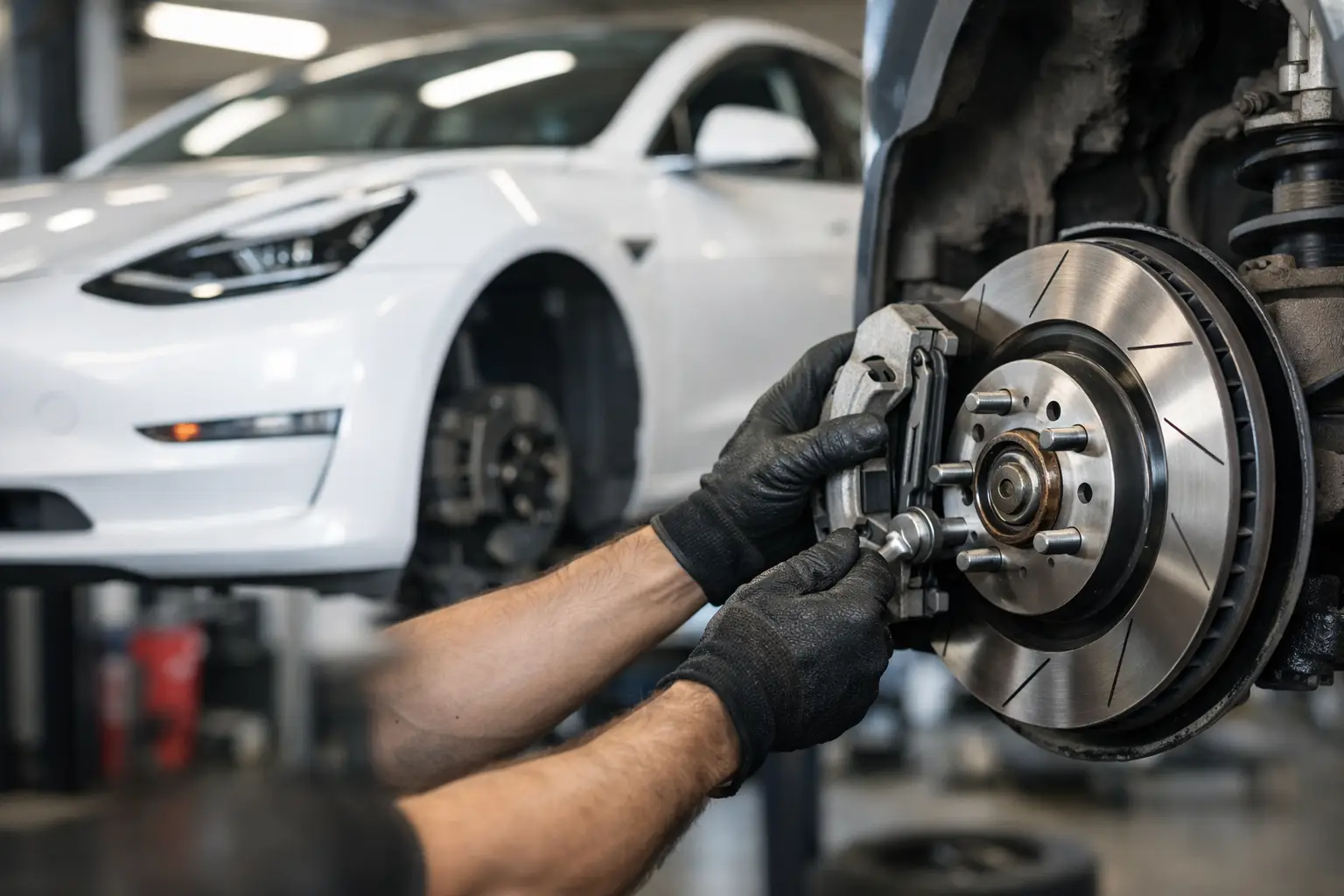
A lot of Tesla owners are surprised when brake problems show up before they expected them to. That surprise usually comes from one simple fact: tesla brake repair is not always about worn-out pads from normal stopping. Because regenerative braking handles so much of the deceleration, the friction brakes on a Tesla can go unused long enough for different problems to develop, especially in a climate with moisture, road salt, and temperature swings.
That changes how brake service should be approached. A technician is not just looking for thin pads and scored rotors. They also need to check for corrosion, sticking calipers, uneven pad contact, noisy operation, electronic parking brake concerns, and whether the system is working as intended after software-controlled braking inputs and mechanical components interact.
Why Tesla brake repair is different
On a conventional vehicle, heavy brake use usually means predictable wear. Pads wear down, rotors wear with them, and replacement happens on a fairly familiar schedule. On a Tesla, the pattern can be less obvious. Regenerative braking reduces how often the friction brakes are used, which can help preserve pad material, but it can also allow rust and buildup to settle on rotor surfaces and moving hardware.
In the Chicago suburbs, that matters. Winter moisture, salt, and long periods of light brake use can create seized slide pins, sticking calipers, rotor corrosion, and uneven braking feel. A Tesla may have plenty of pad life left and still need brake service because the components are not moving freely or making proper contact.
That is why inspection matters more than assumptions. Low pad wear does not always mean the system is healthy.
Common Tesla brake problems owners notice
The first sign is often noise. Owners may hear grinding, squealing, or a scraping sound, especially after the car has been parked overnight or after wet weather. Sometimes that sound clears quickly. Sometimes it points to rust buildup, pad contamination, or hardware that is no longer moving smoothly.
A second clue is feel. If the brake pedal feels inconsistent, the car pulls slightly during braking, or stops feel less smooth than they used to, there may be uneven rotor surfaces or a caliper issue. Even though regenerative braking does much of the work in daily driving, the friction brakes still need to be ready for hard stops and emergency conditions.
Warning messages can also appear, and those should never be ignored. Tesla vehicles rely on tightly integrated electronics, sensors, and control systems. A dashboard alert may indicate anything from a parking brake concern to an ABS-related issue or a fault affecting brake system operation. Diagnosing that correctly takes more than a visual check.
Then there is the problem many owners do not notice until service begins: corrosion on components that rarely get exercised. Brake parts are mechanical. If they are not used enough, they can bind, seize, or wear unevenly in ways that do not always show up as classic brake wear.
Signs you may need Tesla brake repair
If your Tesla makes noise during braking, takes longer to stop, vibrates, pulls to one side, or shows a brake system warning, it is time to have it checked. The same is true if the parking brake feels abnormal or if the vehicle has been through multiple winters without a proper brake inspection and cleaning.
A softer point here is that “it still stops fine” is not always a reliable standard. Many brake issues start small. On a Tesla, light use of the friction brakes can mask developing problems until they become more expensive or more disruptive. Catching corrosion and hardware issues early is usually better for both safety and cost.
What a proper brake inspection should include
A meaningful Tesla brake inspection goes beyond measuring pad thickness. The technician should evaluate pad wear patterns, rotor condition, caliper movement, slide hardware, and brake fluid condition where appropriate. Electronic systems and warning codes also need attention if a message is present.
This is where brand-specific experience helps. Teslas do not reward guesswork. The braking system combines conventional hydraulic components with sophisticated electronic controls, and service procedures can differ from what a general repair shop is used to. If a shop is treating it like any other car, that is not a great sign.
In many cases, the right service may be cleaning and lubricating brake components, freeing up sticking hardware, and addressing early corrosion before major parts replacement is necessary. In other cases, pads and rotors are the correct fix. It depends on condition, not just mileage.
Tesla brake repair vs. routine brake wear
One of the biggest misconceptions around tesla brake repair is that low mileage automatically means low brake service needs. It can mean lower pad wear, yes. It does not guarantee healthy brake components.
Routine wear service is straightforward: pads wear down, rotors wear with them, and both are replaced when they reach service limits. Condition-based Tesla brake service can be different. You may have rotor corrosion severe enough to affect braking even though the pads still have life left. You may have calipers or hardware that need attention because limited friction brake use allowed sticking points to develop.
That distinction matters because it affects pricing, urgency, and the right repair plan. Some owners need a cleaning and maintenance service to restore proper operation. Others need replacement parts because corrosion or damage has already progressed too far.
Can brake problems affect Tesla performance and safety?
Yes, even if the car still feels mostly normal.
A Tesla depends heavily on regenerative braking during daily driving, but the friction brakes remain critical for sudden stops, panic braking, low-traction situations, and system backup. If rotors are heavily corroded or calipers are sticking, braking performance can become inconsistent right when you need full stopping power.
There is also a drivability side to it. Poor brake condition can create vibration, noise, drag, and uneven response that takes away from the smooth, refined driving experience Tesla owners expect. It may not seem urgent on day one, but it rarely improves by being ignored.
How much does Tesla brake repair cost?
The honest answer is that it depends on what is actually wrong.
If the issue is caught early, service may involve inspection, cleaning, lubrication, and minor component attention. If pads and rotors are needed, cost rises accordingly. If electronic diagnostics are required because of warning messages or parking brake faults, that can add time as well. Front and rear brake needs may also differ, and not every Tesla model sees the same wear pattern.
The most expensive approach is often waiting until a small issue becomes a parts issue. Corrosion that might have been managed early can eventually damage rotors or lead to uneven pad wear. A sticking component can create added heat and accelerate wear on surrounding parts. Good diagnostics protect against paying for the wrong repair and help avoid replacing more than necessary.
Choosing the right shop for Tesla brake service
Tesla owners usually already understand that not every shop is equipped for premium vehicles. Brake work may sound basic, but on a Tesla, proper service means more than swapping parts. It means understanding how low friction-brake use changes wear patterns, how electronic systems affect diagnostics, and how to inspect for condition-based issues that are easy to miss.
That is why transparency matters as much as technical skill. You want a shop that can explain what is worn, what is corroded, what can be serviced, and what truly needs replacement. You also want clear communication about what is urgent and what can be monitored. That kind of honesty is a big part of what owners are looking for when they choose an alternative to the dealership.
For drivers in Palatine and the northwest suburbs, that usually comes down to finding experienced technicians, quality parts, and a service process that feels personal instead of rushed. Shops like Wizard Werks have built their reputation on exactly that kind of straight answer.
When to schedule Tesla brake repair
If you are hearing noise, seeing a warning light, feeling vibration, or noticing reduced braking confidence, schedule service now. If everything feels normal but your vehicle has seen a few Midwest winters and has not had the brakes inspected recently, that is also a smart time to bring it in.
Preventive inspection is often the difference between cleaning up a manageable issue and replacing parts that have deteriorated from lack of use. Tesla brakes do not always wear out in the traditional sense, but they still need attention.
A well-maintained Tesla should feel quiet, smooth, and confident every time you slow down. If it does not, the best next step is not to guess – it is to have the system checked by a shop that understands what makes these vehicles different.