
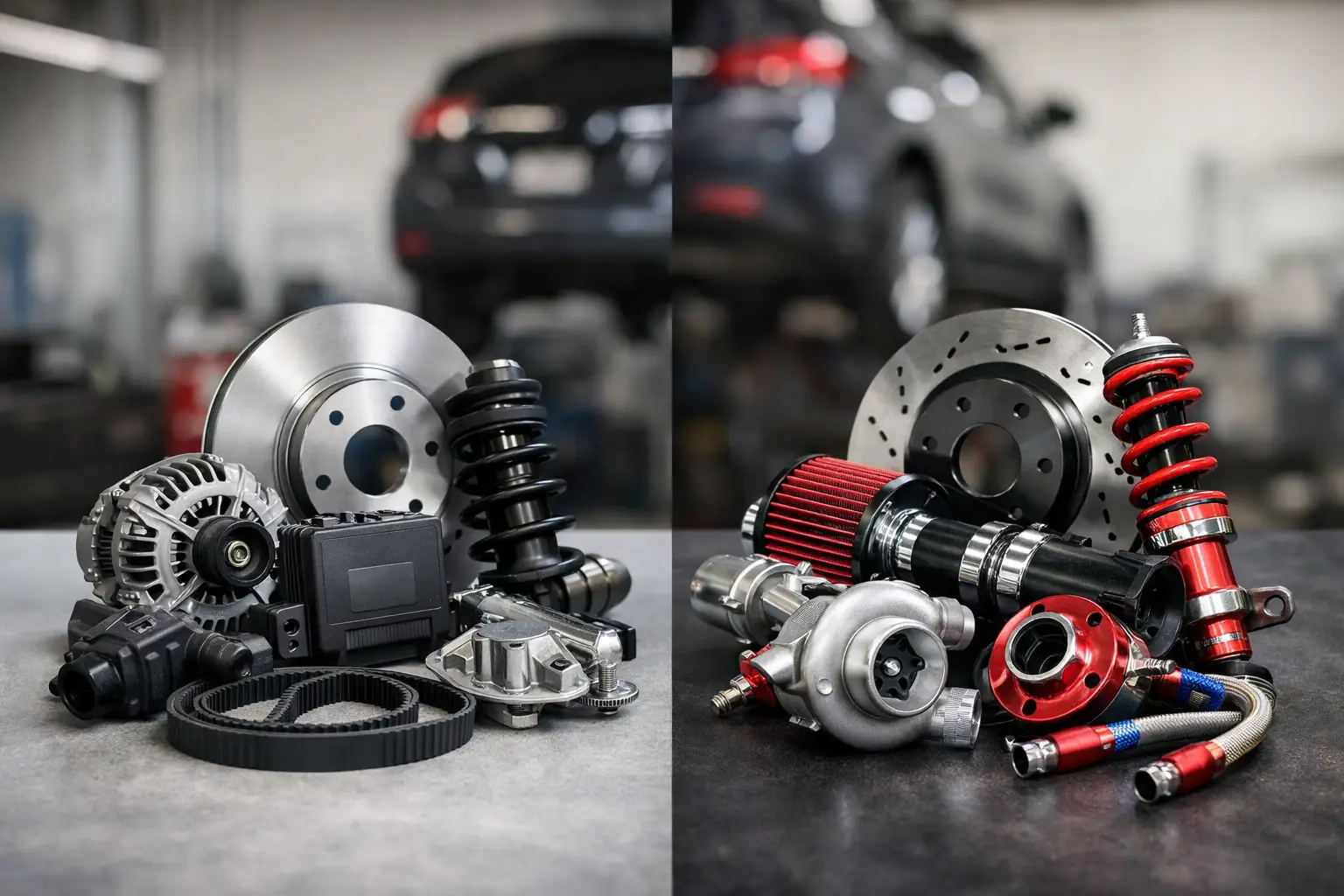
A brake warning light comes on, or your suspension starts making noise, and the next question usually follows fast: should you choose OEM parts vs aftermarket? For European and luxury vehicles, that choice matters more than most drivers realize. The right part can preserve performance, drivability, and long-term reliability. The wrong one can turn a straightforward repair into repeat visits, poor fitment, or new issues you did not have before.
If you drive a BMW, Mercedes-Benz, Audi, Porsche, Land Rover, Jaguar, Volvo, Lexus, or another premium vehicle, parts quality is not a small detail. These vehicles are engineered with tighter tolerances, more complex electronics, and systems that often depend on components working together exactly as designed. That does not mean aftermarket parts are always a bad choice. It does mean the answer is rarely one-size-fits-all.
OEM parts vs aftermarket: the basic difference
OEM stands for Original Equipment Manufacturer. In practical terms, OEM parts are made to the same specifications as the parts your vehicle was built with. They are intended to match the original fit, function, and performance standards for that make and model.
Aftermarket parts are made by companies other than the original manufacturer. Some are produced by highly reputable suppliers that build excellent components. Others are built to meet a lower price point first, with quality and longevity coming second. That range is what makes the aftermarket category harder to judge with a simple yes or no.
For drivers, the real difference is not just branding. It is consistency. OEM parts usually offer a more predictable result, while aftermarket parts can range from excellent to disappointing depending on the manufacturer, the vehicle, and the repair involved.
Why the choice matters more on European and luxury cars
A domestic commuter car may tolerate wider parts variation without obvious problems. European and premium import vehicles often do not. Modern suspension systems, electronic sensors, ignition components, cooling parts, and braking systems are designed to perform within narrow margins.
That is why part selection should never be based on price alone. A lower-cost component that does not communicate properly with the car, wears out early, or changes how the vehicle drives can cost more in the long run. On a luxury vehicle, preserving the original driving feel is part of the repair, not a bonus.
This is especially true when electronics are involved. A sensor that looks identical on paper may still produce incorrect readings, trigger warning lights, or create intermittent problems that are frustrating to diagnose. In those cases, choosing the correct part the first time usually saves money, time, and headaches.
When OEM parts are usually the better choice
OEM parts are often the safer recommendation for repairs tied closely to performance, safety, and system communication. That includes many sensors, control modules, ignition components, cooling system parts, and suspension items where exact fit and calibration matter.
Braking components are another area where quality should not be compromised. The right pads and rotors affect stopping distance, pedal feel, brake dust, noise, and wear patterns. On many luxury vehicles, using the proper materials helps maintain the refined feel owners expect.
OEM parts can also be the better fit for newer vehicles, especially if you want to protect factory-level performance and avoid compatibility issues. For many owners, there is peace of mind in knowing the replacement part was designed to work exactly as intended with the rest of the vehicle.
There is also a warranty consideration. Depending on the repair and the age of the vehicle, OEM parts may support a clearer warranty path and reduce disputes about whether a component meets manufacturer standards.
When aftermarket parts can make sense
Aftermarket does not automatically mean inferior. In some cases, it is a practical and smart option. Certain aftermarket manufacturers produce parts that perform very well and offer strong value, especially for older vehicles or repairs where brand-name packaging adds cost without adding meaningful benefit.
For example, some maintenance and wear items can be good candidates for high-quality aftermarket parts if they come from a trusted supplier and have a proven track record on that specific model. The key phrase there is high-quality. There is a major difference between a reputable aftermarket brand and the cheapest available option.
This is where experience matters. A specialist shop that regularly works on European cars knows which aftermarket parts hold up and which ones lead to comebacks. That knowledge helps separate a cost-effective alternative from a shortcut that creates bigger problems later.
Cost is real, but so is value
Most drivers ask about cost because they should. Repairs are an investment, and nobody wants to spend more than necessary. OEM parts are often priced higher than aftermarket options, but the part price alone does not tell the whole story.
If an aftermarket part fits poorly, fails early, or creates a new diagnostic issue, the labor to replace it again can erase the initial savings. That is especially relevant on vehicles where access is tight and labor times are significant. Saving money on the front end does not help much if the repair has to be done twice.
On the other hand, there are times when a carefully selected aftermarket part delivers solid performance at a lower cost. For an older vehicle with higher mileage, that can be a reasonable way to balance budget and reliability without cutting corners.
The honest answer is that value depends on the part, the vehicle, and how long you plan to keep it. A good shop should explain those trade-offs clearly instead of pushing the most expensive option by default.
OEM parts vs aftermarket for common repairs
Not every repair should be judged the same way. A sensor, a control-related component, and a basic wear item each carry different levels of risk if the part quality is inconsistent.
For electrical diagnostics and check engine concerns, OEM is often the better route because communication and calibration matter so much. For suspension and steering components, the decision may depend on the brand of aftermarket part and how critical the component is to ride quality and handling. For brake service, material quality and vehicle-specific engineering play a major role, so the part choice should be made carefully.
Oil filters, air filters, and some maintenance-related items can sometimes have strong aftermarket options, but even there, quality varies more than many owners expect. On premium cars, small differences in filtration or construction can have larger effects over time.
The hidden risk of bargain parts
The biggest problem with low-end aftermarket parts is not just shorter lifespan. It is unpredictability. You may get extra noise, uneven wear, warning lights, vibration, poor fitment, or subtle changes in how the vehicle drives. Those issues are frustrating because they do not always look dramatic at first. They just make the car feel slightly off.
That matters to drivers who chose a European or luxury vehicle for a reason. These cars are built to feel precise, quiet, responsive, and composed. A part that technically works but changes that experience is not really an equal replacement.
This is why transparent recommendations matter. A trustworthy shop should be comfortable saying when OEM is the right call, when a premium aftermarket option is acceptable, and when the cheapest route is likely to cause trouble.
How a specialist shop should guide the decision
The best advice starts with your specific car and your goals. Are you keeping the vehicle for years? Is it a daily commuter with high mileage, or a lower-mileage vehicle you want to maintain to a higher standard? Is the repair tied to safety, drivability, or electronics? Those details shape the recommendation.
At Wizard Werks, that conversation is part of doing the job correctly. European and luxury vehicles deserve more than generic parts advice. They need brand-specific judgment, proper diagnostics, and a clear explanation of why one option makes more sense than another.
A good shop will not treat OEM and aftermarket as a debate with one universal winner. It should treat part selection as part of the repair strategy. Sometimes OEM is the smartest move. Sometimes a proven aftermarket part is a sensible choice. What matters is making that decision with experience, honesty, and a focus on long-term results.
If you are ever unsure, ask one simple question: which option gives this car the best chance of driving the way it should six months from now, not just the day it leaves the shop? That is usually where the right answer starts.