
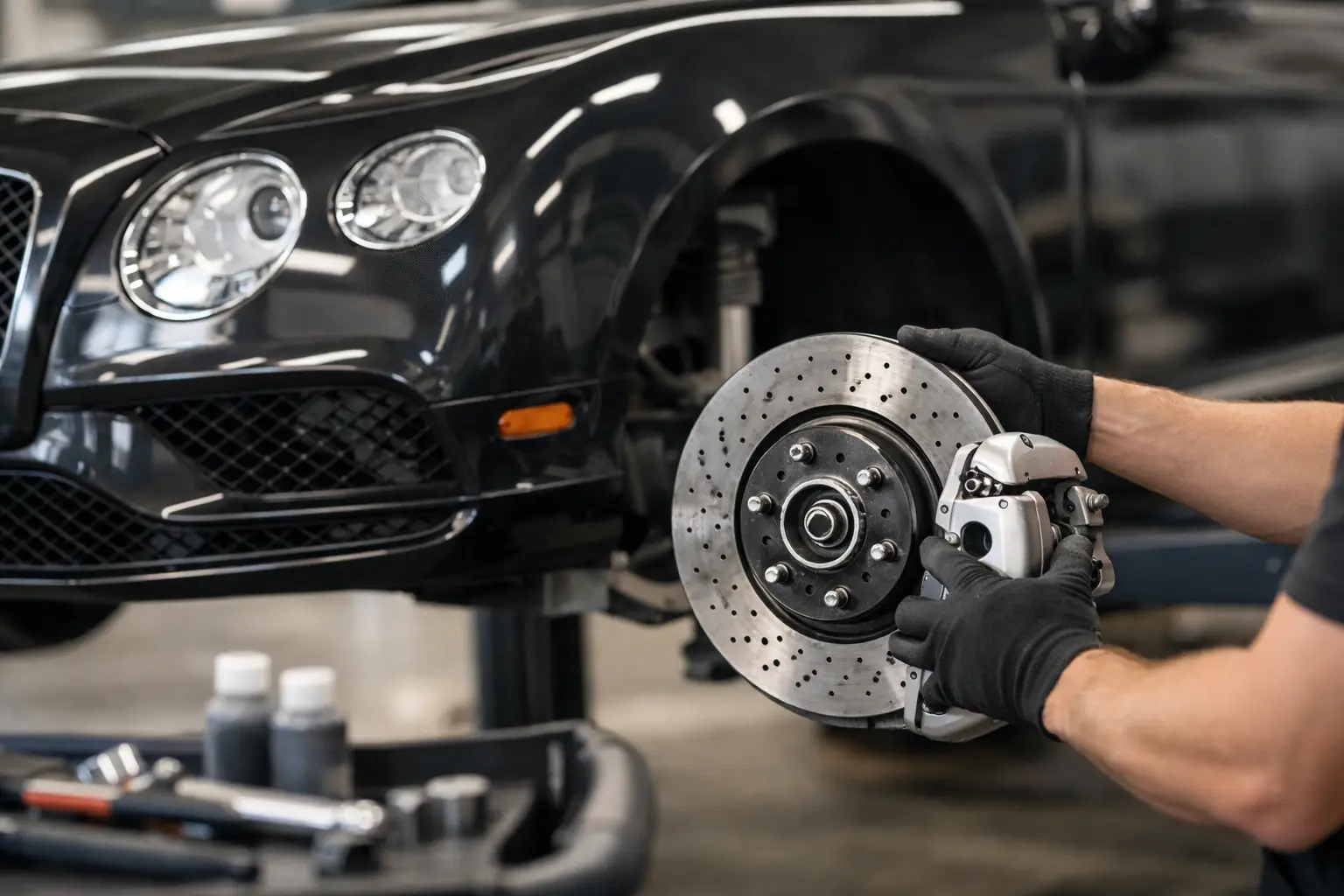
When a Bentley starts showing brake warning lights, vibration, squealing, or a soft pedal, the issue is rarely something to put off until next month. Bentley brake repair is about more than replacing worn pads. It is about protecting a heavy, high-performance luxury vehicle that depends on precise braking feel, quiet operation, and exact component matching.
A Bentley does not respond well to guesswork or generic brake service. These vehicles are engineered for smooth, confident stopping at a level that blends safety, comfort, and performance. When the brakes are not serviced correctly, owners often notice the difference right away – longer stopping distances, pedal pulsation, noise that should not be there, or a change in how the car settles under braking.
Why Bentley brake repair is different
Bentley brake systems are built for vehicles with substantial weight, strong power output, and refined road manners. That combination changes the service approach. The brakes need to manage heat effectively, maintain consistent pedal feel, and work in harmony with the car’s ABS, stability systems, and electronic sensors.
That means the right repair starts with proper diagnosis, not assumptions. A brake warning light may point to pad wear, but it can also involve sensor issues, rotor wear, caliper problems, hydraulic concerns, or electronic faults. On a Bentley, those distinctions matter. Replacing parts without identifying the full cause can lead to repeat visits, uneven wear, and unnecessary expense.
There is also the question of parts quality. Premium brake systems are sensitive to material differences. Pads that are too aggressive, too soft, or simply not matched correctly can create excessive dust, noise, poor bite, or accelerated rotor wear. Saving money on the wrong components often costs more later.
Common signs your Bentley needs brake service
Some brake problems build slowly. Others show up all at once. In either case, it pays to pay attention early.
A high-pitched squeal can mean pads are nearing the end of their service life, but not always. Grinding is more urgent and may indicate metal-to-metal contact. A pulsing brake pedal often points to rotor wear or heat-related issues. If the car pulls while braking, one side may not be applying evenly. If the pedal feels soft or low, there may be a hydraulic problem that should be inspected right away.
Bentley owners also sometimes notice more subtle changes first. The car may feel less composed during stops, braking may seem less smooth in traffic, or the response may feel delayed compared with what they are used to. On a vehicle known for refinement, small changes are worth checking.
What a proper Bentley brake inspection should include
A quality brake inspection goes beyond pad thickness. The technician should evaluate the full system, including rotors, calipers, wear sensors, brake fluid condition, hoses, hardware, and any stored fault codes related to braking or stability control.
Rotor condition is especially important. Some rotors can be measured and evaluated for wear patterns, heat spotting, and thickness variation. In many luxury applications, replacement is the better path rather than trying to stretch service life. It depends on specifications, wear level, and how the vehicle is driven.
Brake fluid also deserves attention. Many owners focus on pads and rotors, but brake fluid absorbs moisture over time. On a Bentley, old fluid can affect pedal feel and braking consistency, especially under repeated use. A proper service plan takes fluid condition seriously instead of treating it as an afterthought.
Bentley brake repair vs. generic brake work
This is where owners often run into trouble. A general repair shop may be perfectly capable with everyday vehicles, but Bentley service calls for brand familiarity, specialized scan tools, and a technician who understands what normal looks and feels like on this platform.
For example, electronic brake system communication, service interval resets, wear sensor handling, and exact torque procedures all matter. Even road testing matters. A technician who regularly works on European and luxury vehicles is more likely to identify whether the concern is mechanical wear, a control issue, or simply an incorrect prior repair.
There is a trade-off here. Dealer service offers factory familiarity, but many owners are looking for a more personal and cost-conscious option without compromising standards. That is where an experienced independent specialist makes sense. The key is choosing a shop that uses OEM or equivalent-quality parts, follows manufacturer procedures, and explains what your Bentley actually needs instead of selling everything at once.
Repair or replace? It depends on wear and the system design
Not every Bentley brake visit means a full brake job. Sometimes the pads are worn but the rotors are still within specification. In other cases, both should be replaced together to protect performance and avoid uneven bedding or noise.
Calipers may only need service if there is sticking, leaking, or uneven application. Sensors might need replacement if they have reached their wear limit or been damaged during prior service. Brake fluid may be due based on age rather than mileage.
This is where honest inspection matters. The right recommendation depends on current measurements, system condition, and owner goals. If you plan to keep the vehicle long term, preventive replacement of worn related components can save time and labor later. If the system is otherwise healthy, there is no reason to replace good parts just because the car carries a luxury badge.
What Bentley owners should expect from the repair process
A professional brake repair experience should feel organized and transparent from the start. The shop should confirm the symptoms, inspect the vehicle thoroughly, and explain the findings in plain language. You should know what is worn, what is still serviceable, and what needs attention now versus later.
You should also expect a clear estimate and a realistic timeline. Premium vehicles sometimes require specific parts and procedures, so speed should never come at the expense of accuracy. A rushed brake job on a Bentley is not a bargain.
After repairs, the system should be tested properly. That includes confirming pedal feel, braking response, warning light status, and overall drivability. If new pads and rotors are installed, you should also receive guidance on proper break-in so the components seat correctly and perform as intended.
Choosing the right shop for Bentley brake repair
If you are comparing your options, look for a shop that regularly services European and luxury vehicles, has ASE-certified technicians, uses manufacturer-grade diagnostic equipment, and stands behind its work. Those are practical indicators that the shop takes the work seriously.
It also helps to choose a team that communicates well. Bentley owners usually do not want a sales pitch. They want straight answers. What failed, why it failed, what the repair involves, and what can wait. That kind of transparency builds trust and usually leads to better long-term maintenance decisions.
For owners in Palatine and the northwest suburbs, Wizard Werks provides the kind of specialized, dealership-alternative service that makes sense for Bentley maintenance and repair. The value is not just lower pricing than a dealer. It is getting skilled work, honest recommendations, and personal attention from a team that understands premium vehicles.
Preventing premature brake wear
Driving style, traffic conditions, and vehicle weight all affect brake life. Stop-and-go suburban commuting will wear brakes differently than steady highway driving. Aggressive braking builds heat faster. Long periods between inspections can let small issues turn into more expensive ones.
The best approach is simple. Have the brakes checked during routine service, address warning signs early, and use the correct parts. That does not guarantee the lowest repair bill every time, but it usually prevents the frustrating pattern of repeat brake noise, uneven wear, or shortened component life.
A Bentley should stop with the same confidence and composure it delivers everywhere else on the road. If the braking feels off, sounds wrong, or shows any warning at all, getting it inspected by a qualified specialist is the smart next move.