
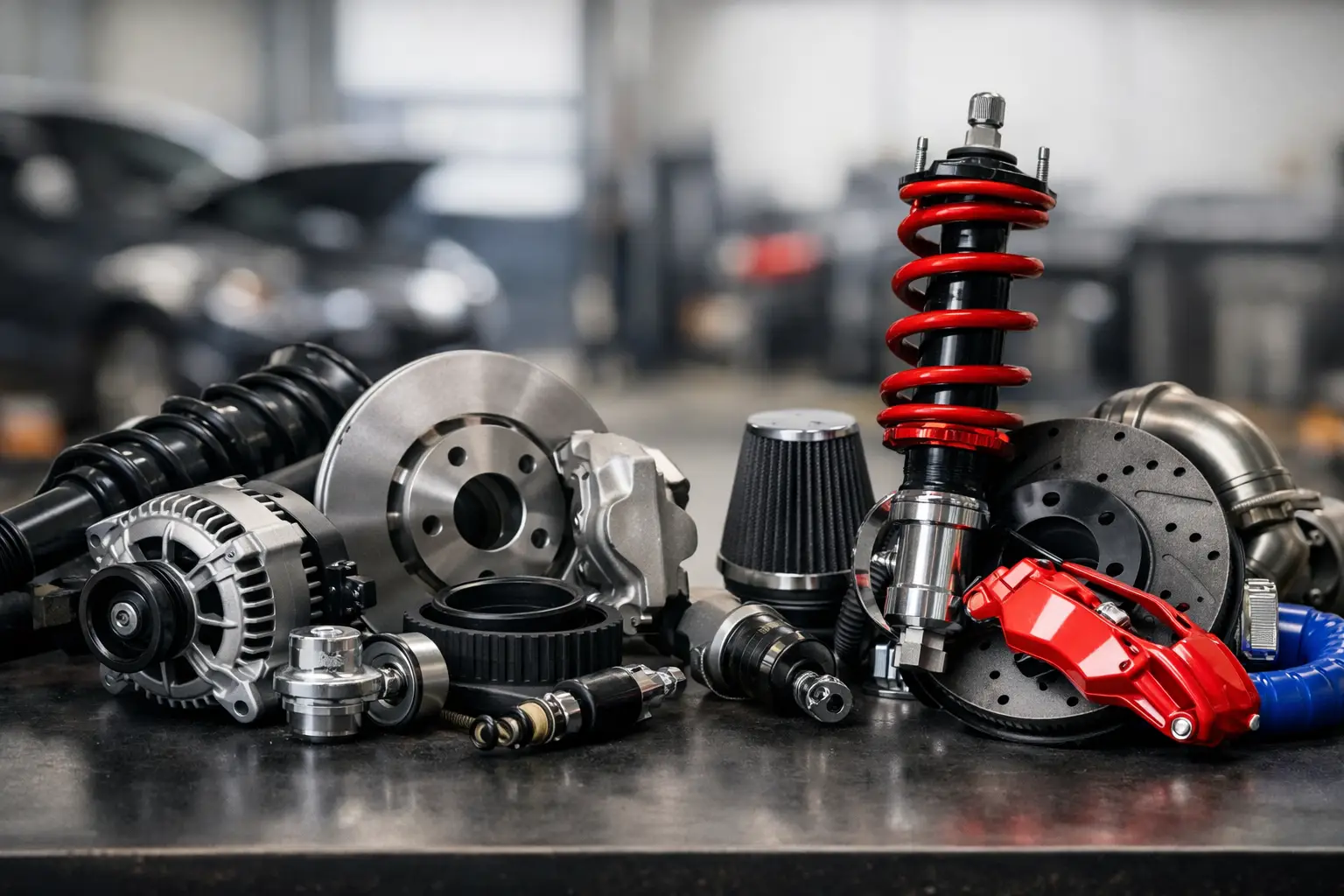
When your BMW needs brakes, your Mercedes has a cooling issue, or your Audi is due for suspension work, the question usually comes up fast: oem parts vs aftermarket parts – which is actually the better choice? For European and luxury vehicles, that answer is rarely as simple as cheaper or more expensive. The right part depends on the system being repaired, the quality level of the replacement, and how you use and plan to keep the car.
For many owners, this decision matters most when they are trying to balance cost with confidence. You want the vehicle to drive the way it was designed to drive. You also do not want to pay dealership prices for every repair if there is a reliable alternative. That is where good advice matters. A quality repair shop should be able to explain the difference clearly, recommend the right option for the job, and tell you why.
OEM parts vs aftermarket parts: what is the difference?
OEM stands for Original Equipment Manufacturer. In practical terms, an OEM part is made by or for the vehicle manufacturer to the same specifications as the part installed at the factory. If you drive a Porsche, Volvo, or Land Rover, an OEM part is intended to match what the manufacturer approved for that vehicle.
Aftermarket parts are made by companies other than the vehicle brand. That does not automatically mean lower quality. Some aftermarket manufacturers produce excellent parts, including components that may be nearly identical to OEM in fit and performance. Others are built to a lower standard, with different materials, looser tolerances, or shorter service life.
That wide range is what makes the aftermarket category tricky. OEM is more predictable. Aftermarket can be a smart value or a costly shortcut, depending on who made the part and where it is being installed.
Why the choice matters more on European and luxury cars
Premium import vehicles are engineered with tighter tolerances, more complex electronics, and brand-specific performance standards than many mainstream vehicles. A part that is slightly off in fit or function can lead to warning lights, drivability problems, noise, uneven wear, or repeat repairs.
Take brake components as an example. On a European vehicle, the wrong pad compound can affect stopping feel, brake dust, rotor wear, and even how the vehicle responds under daily driving. The same goes for sensors, suspension components, cooling system parts, and electrical pieces. A bargain part that works well enough on one platform may create issues on another.
This is why experienced shops do not treat every repair the same way. Some jobs call for OEM without much debate. In other cases, a high-quality aftermarket option can perform very well and save money without sacrificing reliability.
When OEM parts are usually the safer choice
OEM parts tend to make the most sense when fit, software compatibility, or long-term durability are critical. Electronic sensors and modules are a common example. On many BMW, Mercedes-Benz, Audi, and Jaguar models, even a small difference in how a sensor reads can trigger fault codes or affect system performance.
Seals, gaskets, cooling system components, and certain engine management parts also often benefit from staying with OEM. These parts may look simple from the outside, but material quality and precise dimensions matter. A small variation can create leaks, poor performance, or premature failure.
OEM is also a strong choice for owners who plan to keep the vehicle for years and want repairs done as close to factory standard as possible. If preserving original performance and minimizing guesswork are your priorities, OEM often delivers peace of mind that justifies the higher upfront cost.
When aftermarket parts can be a smart option
Aftermarket parts make sense when the brand is reputable, the part has a proven track record, and the application does not demand strict manufacturer sourcing. Brake pads and rotors, some suspension components, filters, and certain wear items may have aftermarket options that perform very well.
In some cases, the aftermarket manufacturer may even supply parts very similar to what was originally installed, just without the vehicle brand label and price premium. That can create meaningful savings for the customer while maintaining quality.
There are also situations where an aftermarket part is chosen because it addresses a known weakness in the original design. Not every factory part is perfect. A well-made upgraded replacement can sometimes improve longevity or performance. The key is knowing the difference between a genuine improvement and a part that simply costs less.
OEM parts vs aftermarket parts on price
Price is usually where this conversation starts, but it should not be where it ends. OEM parts often cost more because they come through the manufacturer supply chain and carry the brand’s specifications and packaging. Aftermarket parts can be less expensive, sometimes significantly so.
But the true cost of a repair is not just the price of the part. It also includes labor, downtime, and the risk of needing the job done again. If a low-cost part fails early or does not fit correctly, the savings disappear quickly. On a premium vehicle, repeat labor can cost far more than the difference between parts.
That is why the smartest approach is not cheapest part versus most expensive part. It is best-value part for that repair. Honest recommendations should factor in reliability, warranty support, expected life, and whether the part is appropriate for the vehicle.
Fit, performance, and warranty considerations
Fitment is where OEM has a clear advantage. The part should install as intended and work with the vehicle’s systems without modification or compromise. That matters on modern luxury cars, where mechanical and electronic systems are closely linked.
Performance is more nuanced. A quality aftermarket part may perform just as well in the right application. A lower-grade one may introduce vibration, noise, inconsistent operation, or shorter lifespan. This is especially important with steering, suspension, braking, and electrical work.
Warranty also deserves attention. Some OEM parts come with strong manufacturer-backed coverage. Many aftermarket brands also offer warranties, but the practical value depends on how reliable the part is and how the repair shop stands behind the work. A transparent shop should explain both the part warranty and the labor warranty so you know exactly what you are getting.
How a good shop decides what to recommend
A good repair recommendation should never sound like a sales script. It should sound like a conversation about your car, your goals, and your budget.
If you drive a newer Range Rover and want to maintain factory-level performance, the recommendation may lean heavily toward OEM for key systems. If you own an older Volkswagen or Lexus and want dependable maintenance without overspending, a carefully selected aftermarket part may be the better fit. The right answer changes based on mileage, condition, repair type, and how long you plan to keep the vehicle.
At Wizard Werks, that means looking at the repair in context, not pushing a one-size-fits-all answer. Some parts are worth insisting on. Others offer room for flexibility without compromising the quality of the repair. Customers usually appreciate straightforward guidance more than blanket statements, especially when they are trying to make a smart long-term decision for a premium vehicle.
What vehicle owners should ask before approving a repair
If you are deciding between OEM and aftermarket, ask who made the part, why it is being recommended, and whether there are different quality levels available. Ask how the choice may affect fit, performance, and expected service life. It is also fair to ask whether the part has been reliable on your specific make and model.
Those questions matter because aftermarket is not one single standard. There is a major difference between a trusted premium supplier and an economy-grade replacement. A shop that specializes in European and luxury cars should be comfortable explaining that difference clearly.
The best repair decisions are informed ones. If the explanation is vague, or if the recommendation seems based only on price, that is usually a sign to slow down and ask more questions.
For most European and luxury vehicle owners, the real goal is not winning the OEM-versus-aftermarket debate. It is choosing parts that keep the car safe, reliable, and enjoyable to drive without paying for more than the repair truly requires. The right shop will help you make that call with clarity, not pressure.