
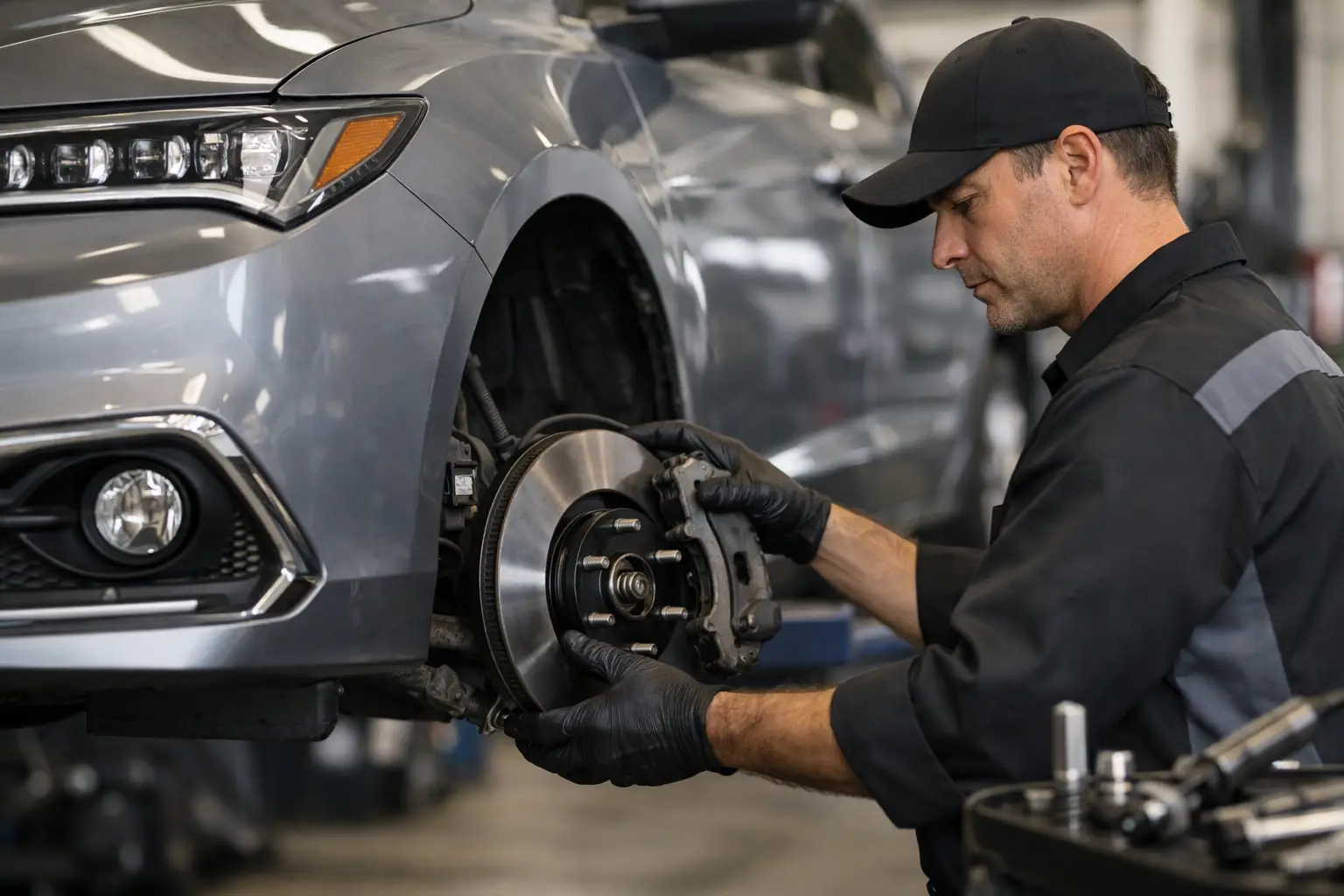
That slight pulse in the brake pedal on Rand Road, the squeal when backing out of the driveway, or the longer stopping distance you start noticing in traffic – those are not issues to put off on an Acura. An Acura brake service specialist understands that brake work is not just about replacing pads. It is about restoring the feel, control, and confidence your vehicle was engineered to deliver.
Acura models are refined, performance-minded vehicles. Even when the brake system looks straightforward on paper, the service approach should not be generic. The right repair process takes into account the condition of the rotors, pad wear patterns, caliper operation, fluid condition, electronic brake system behavior, and how the vehicle is actually being driven. That level of attention is what separates specialist care from a quick in-and-out brake job.
Why an Acura brake service specialist matters
Acura drivers usually know when something feels off. Maybe the steering wheel vibrates under braking. Maybe the pedal feels softer than it used to. Maybe the brakes still work, but they no longer feel smooth or predictable. Those symptoms can have more than one cause, and guessing gets expensive fast.
An Acura brake service specialist starts with the full picture instead of jumping straight to parts replacement. Uneven pad wear may point to a sticking caliper. Premature rotor wear can be tied to heat, hardware issues, or installation shortcuts from previous service. A brake warning light may involve electronic monitoring rather than a simple friction-material issue. If the diagnosis is rushed, the repair often is too.
This is especially important for owners who want dealer-level accuracy without the dealership experience. Acura brake systems need proper inspection, quality parts, and the correct service procedures. When that happens, you get quieter operation, more consistent stopping power, and fewer repeat visits.
What proper Acura brake service should include
Brake service should begin with inspection, not assumptions. A technician should measure pad thickness, inspect rotor condition, check for scoring or heat spots, verify caliper movement, examine brake lines and hoses, and evaluate brake fluid. On many vehicles, that also means checking sensors and monitoring related system behavior during the inspection process.
A good service recommendation is based on what your Acura actually needs. Sometimes that means pads and rotors on one axle. Sometimes it means addressing seized hardware, fluid contamination, or a caliper issue that would quickly ruin new parts. Sometimes a customer comes in expecting a full brake job and finds out the more urgent need is something smaller and more targeted. Honest service works that way.
Quality also matters more than many drivers realize. Brake noise, vibration, and poor wear life often trace back to low-grade parts or rushed installation. Premium vehicles respond better to OEM or equivalent-quality components, correct bedding procedures, and careful assembly. Saving money upfront with bargain parts can cost more when the car comes back with noise, pulsation, or uneven braking.
Pads and rotors are only part of the job
A lot of brake complaints come from service that focused only on visible wear items. Pads and rotors matter, but so do the mounting surfaces, slide pins, anti-rattle hardware, and caliper condition. If those details are overlooked, the vehicle may leave with new parts but not with proper brake performance.
That is one reason specialist service tends to hold up better over time. The goal is not just to make the warning noise go away. The goal is to restore smooth, reliable braking that feels right in daily driving.
Brake fluid deserves more attention than it gets
Brake fluid is often ignored because it is out of sight. The problem is that fluid absorbs moisture over time, and that affects braking performance and long-term system health. In a luxury or premium import vehicle, fluid condition is not a small maintenance detail. It can influence pedal feel, internal corrosion, and the performance of brake-related hydraulic components.
If your Acura has never had a fluid service, or if it has been several years, it is worth asking for an inspection. Not every vehicle needs the same timing, but no vehicle benefits from neglected fluid.
Common signs your Acura needs brake service
Some brake problems announce themselves loudly. Others creep in slowly enough that drivers adapt without realizing it. The earlier the issue is diagnosed, the better your chances of avoiding bigger repair costs.
Noise is one of the most common reasons people schedule brake service. Squealing can mean worn pads, but it can also point to glazing, hardware issues, or rotor surface problems. Grinding is more serious and often means the friction material is worn down far enough to risk rotor damage.
Vibration or pulsation during braking should also be checked promptly. That feeling can come from rotor issues, but it can also be tied to uneven contact surfaces or installation problems. Pulling to one side, a soft pedal, a brake warning light, or a burning smell after driving all deserve professional attention.
If your Acura simply does not feel as confident stopping as it used to, trust that instinct. Brake problems are often easier to solve when they are caught early.
How to choose the right Acura brake service specialist
Not every repair shop that offers brake service is equipped to service premium import vehicles the right way. For Acura owners, experience matters, but so does process.
Look for a shop that performs a complete inspection before quoting repairs. That sounds basic, but it tells you a lot about how the shop operates. A trustworthy specialist explains what is worn, what is still serviceable, and what should be addressed now versus monitored later. You should not feel pushed into work that has not been clearly explained.
It also helps to ask about parts quality, technician training, and diagnostic capability. Acura vehicles may not require exotic service, but they do require disciplined service. Shops that routinely work on luxury and import vehicles tend to be better prepared with the right tools, the right service information, and the right standards.
Transparency is another big factor. Brake service should not feel vague. You should know what is being replaced, why it is being recommended, and what result to expect. If a shop cannot explain the repair in plain language, that is usually a sign to keep looking.
Dealer alternative versus general repair approach
For many Acura owners, the best fit is a dealer alternative – a shop that understands premium vehicles but offers a more personal experience and more reasonable pricing. That middle ground matters. You want specialist-level care without paying for dealership overhead or getting lost in a high-volume service lane.
A strong independent shop can often provide the same quality standards customers expect from the dealer, especially when it uses OEM parts or equivalent components and follows manufacturer-correct procedures. The difference is usually in communication. You get a more direct conversation, clearer recommendations, and a service experience built around trust instead of upselling.
What to expect from a better brake service experience
A better experience starts before the repair begins. The shop should listen to what you are feeling, ask useful follow-up questions, and confirm the concern with an inspection. That matters because not every brake issue feels the same, and not every customer describes it the same way.
From there, the process should stay clear. You should receive an honest assessment, practical options when appropriate, and straightforward timing on the repair. If additional issues are found, they should be explained without pressure. Good service is not about turning a brake visit into a larger sales conversation.
For drivers in Palatine and the northwest suburbs who want Acura brake care done right, that mix of technical skill and honest communication is exactly what makes a specialist worth it. At Wizard Werks, that means treating brake service as a safety system, a performance system, and a trust issue all at once.
When your Acura brakes feel right, the whole vehicle feels right. If something has changed, do not wait for it to get louder or more expensive. The best next step is simple – have it checked by someone who knows what proper Acura brake service is supposed to feel like.